Vilu: Designing Conversational AI for Hispanic Elders Across Language and Culture
By 2030, 8+ million Hispanic Americans will be over 65. Yet existing companion technologies were built for English speakers. 56% of Spanish-speaking elders report persistent loneliness—13 points higher than non-Hispanic peers.
This isn't just about language. It's about understanding:
Culturally aligned presence
Communication styles and pacing
Regional dialects and accents
Most AI companion solutions available today were designed for English-speaking markets—when Spanish is offered, it's often an afterthought translation that misses regional and cultural nuances critical for meaningful connection.
We built Vilu, a Spanish-speaking companion robot, and asked:
Can a robot create genuine connection across cultural contexts?
What happens when existing speech-to-text technology meets regional dialect and elderly speech?
What makes Spanish-speaking elders want to engage?
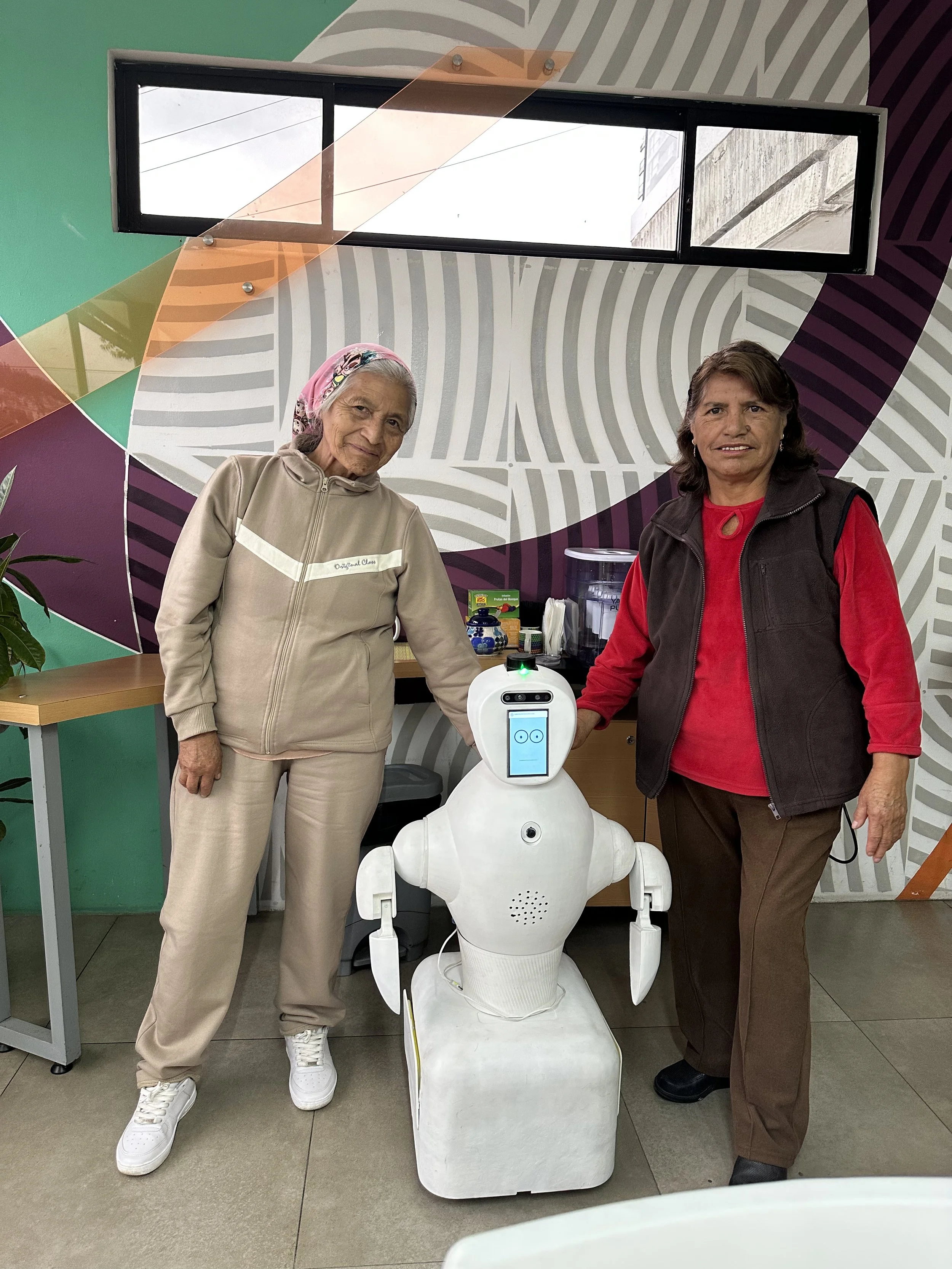
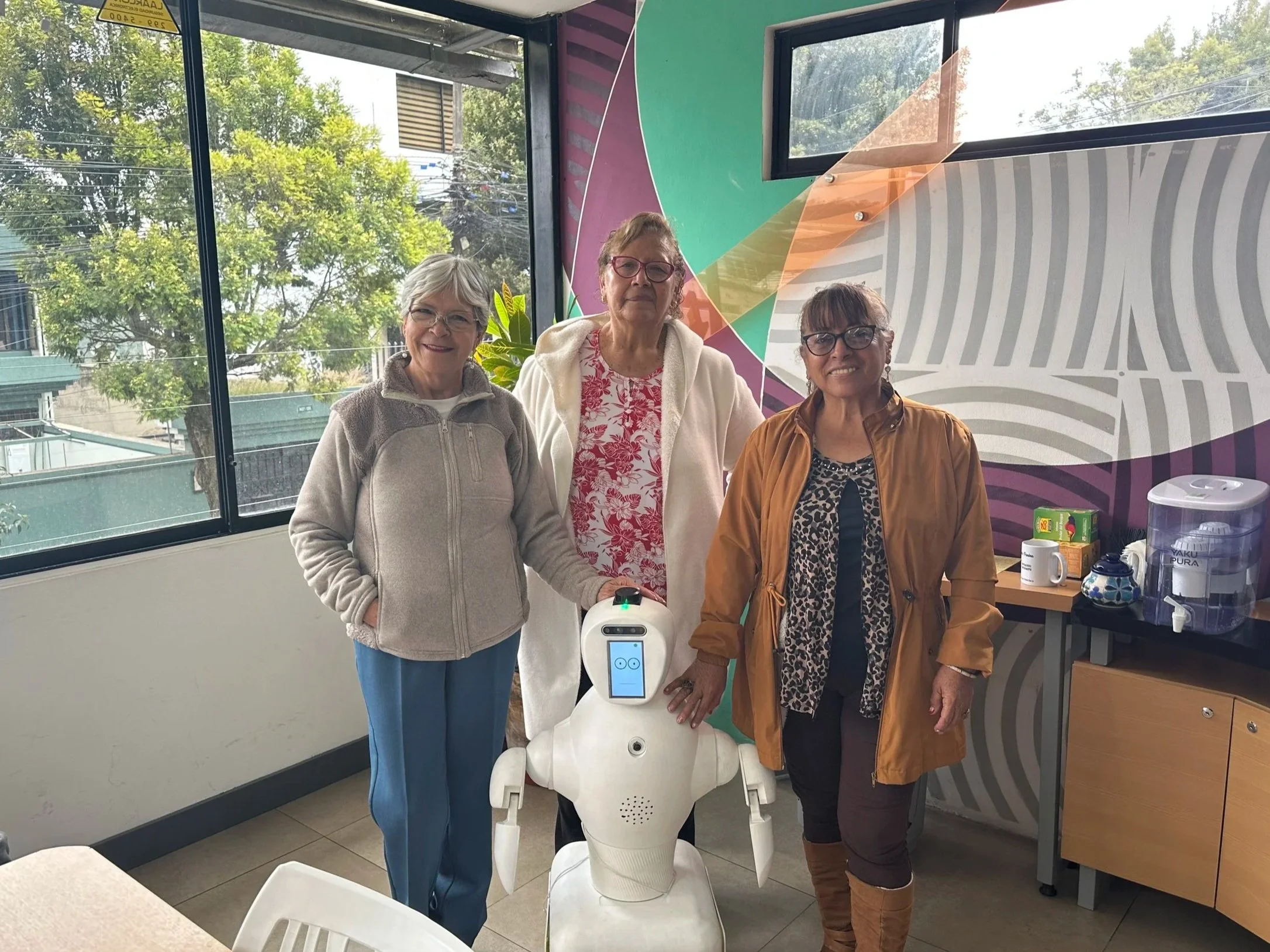
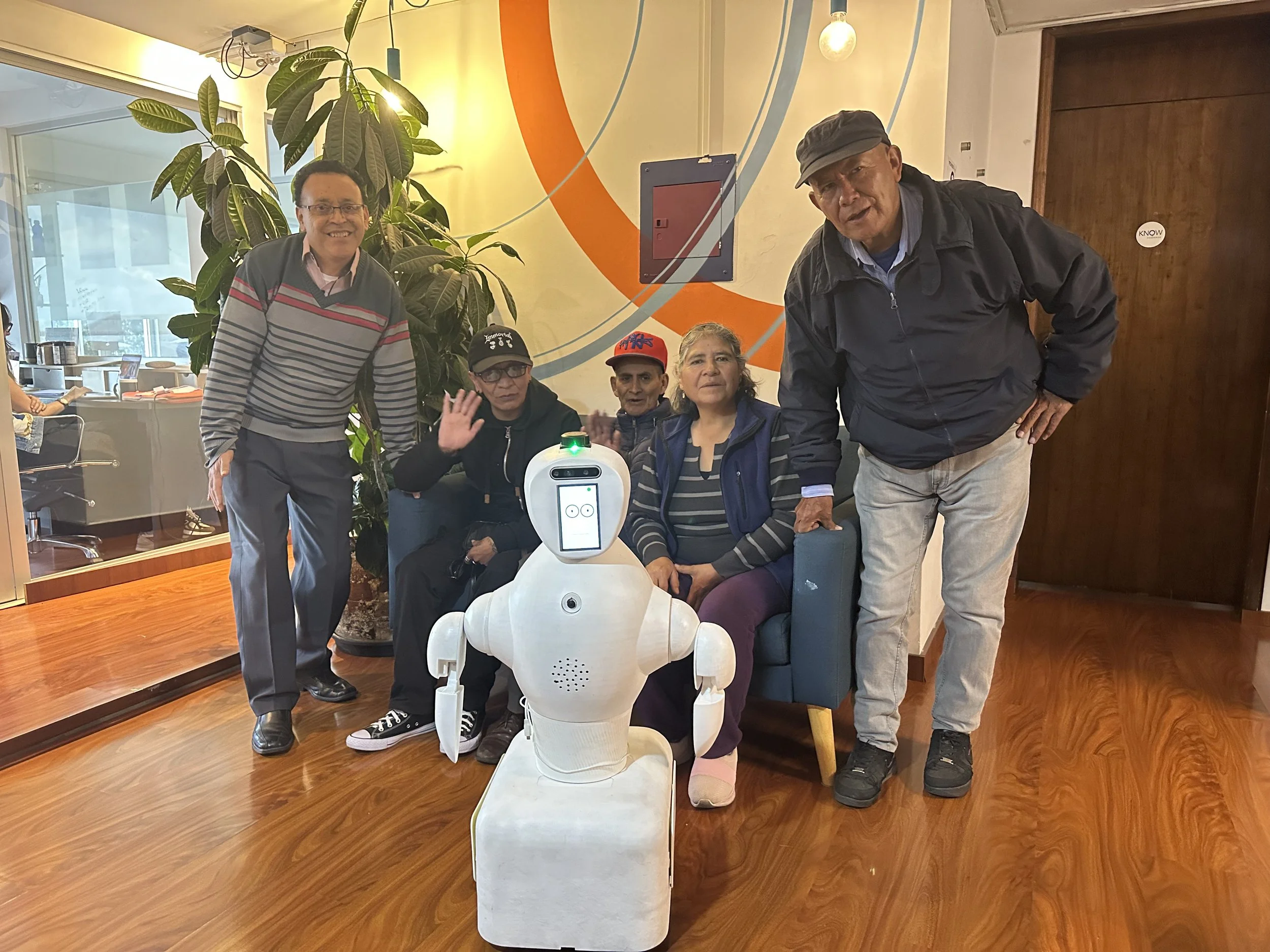
We conducted 36 conversations with 13 adults (55-75) in Quito, Ecuador. We didn't measure clinical outcomes. We watched what worked—and what didn’t.
FINDING 1: Cultural Depth Creates Connection
“It's a truly extraordinary program, I would say. [...] This modern robot is also going to help us a lot. It's a very important tool for me. It's a tool I can use in my daily life because it will give us guidance, advice, and help us with things we sometimes can't develop on our own. For children, students, professionals—everyone who needs this wonderful robot.”
—Participant, 64 years old
“It would help me a lot [in my daily life]. I never thought I'd talk to a robot. It would seem useful to a person, like a guide. [...] The robot seemed intelligent to me because it told me about things I didn't know. It's an intelligent robot.”
— Participant, 55 years old
44% of the conversations (16 of 36) involved deeper topics, and 54% of the participants (7 of 13) engaged at this level. These connections centered on:
Religion and faith practices
Family values and traditions
Life purpose and meaning
Spanish-speaking elders don't want small talk. They want conversations that honor their values.
“It's like talking to a person. I liked it. [The robot could change my daily life] by conversing, by paying attention to me. I know it will keep me company, and talk to me. I know it would be a good company, and I would like that”
— Participant, 62 years old
But most significantly: 84% of participants (11 of 13) engaged in memory recall—sharing detailed stories from their past, recounting family histories, and reflecting on life experiences.
Research shows that Hispanic/Latino older adults face disproportionate dementia risk—1.5 times higher than non-Hispanic whites—yet have less access to cognitive engagement interventions.
Conversational AI that naturally induces reminiscence could help address this disparity.
FINDING 2: Language Barrier—The Technical Gap
We mentioned that existing systems were designed for English markets. Our study revealed the specific technical consequences of this gap. Despite being Spanish-capable, existing speech recognition systems struggle with regional dialects and elderly speech.
The Impact We Observed:
Frequent misunderstandings disrupted conversation flow
Users had to repeat themselves multiple times
Connection was harder to maintain with language barriers
Current Spanish speech models are trained primarily on Peninsular Spanish (Spain) and Mexican Spanish—the largest available datasets. They are not optimized for:
Vowel sounds and pronunciation patterns
Regional expressions and colloquialisms
Elderly speech characteristics (slower pace, softer volume)
Existing speech recognition tools are trained on limited data for this population. The gap is solvable, but requires targeted optimization for regional elderly Spanish.
FINDING 3: Conversational Intelligence Still Matters
Even when speech was understood, conversations had gaps:
Repetition & Loops: The robot sometimes revisited topics or questions, users became frustrated: "I already said that".
Topic Exhaustion: Conversations stayed on topics too long, user engagement visibly declined.
Memory Gaps: The robot didn't always remember previous conversations. Trust decreased when details were forgotten
Current conversational systems—while capable in general contexts— lack the awareness needed for eldercare applications. They struggle to detect when understanding is uncertain, when topics have been exhausted, or when older adults are disengaging.
What works for brief, task-focused exchanges doesn't translate to the sustained, adaptive conversations that elders require.
FINDING 4: Physical Presence Matters
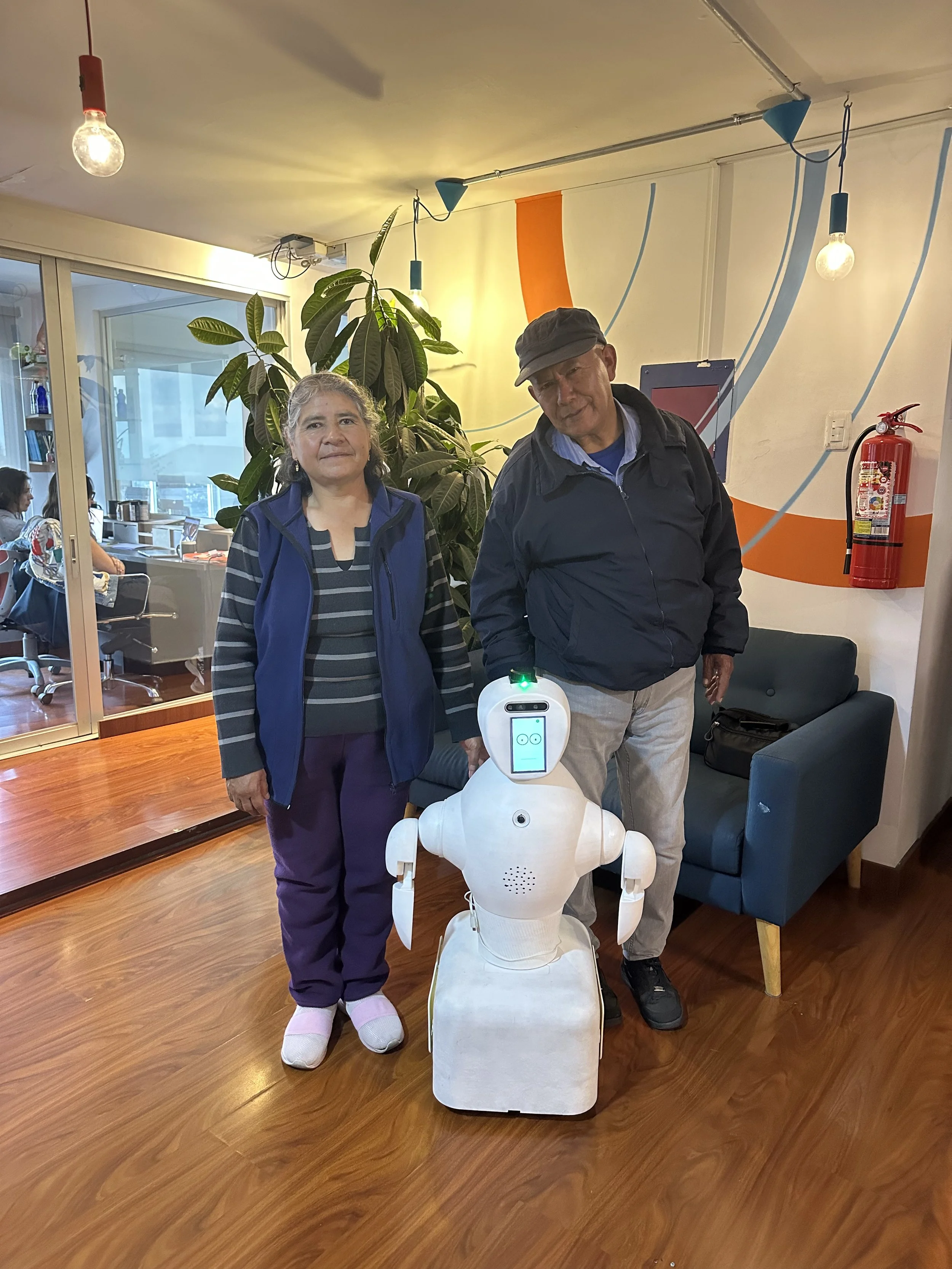
“It's good that these kinds of help exist. Children are busy, they have their jobs, and we elderly people are left alone. And it would be good to have companionship like this. [...] It's good to keep us company, to listen to us because sometimes we don't have anyone to talk to.”
— Participant, 73 years old
“It would be a companion. And yes, that's necessary when a person is alone, to interact, to share, and to be there in the house. It would be useful for me. I would see the robot as a tool to ask questions, to have it explain things to me.”
— Participant, 75 years old
Users consistently noted that Vilu's physical presence—even with simple movements—created a different quality of interaction than voice-only systems. Critically, they used relational language: "company," "being there," "listening to us"—descriptions they don't apply to the voice assistants they already own.
Physical embodiment served a specific function: maintaining connection when technology struggled. When speech recognition failed to capture regional dialect or elderly speech patterns—a frequent occurrence— Vilu's physical attentiveness (head movements, orientation) helped preserve the sense of being heard. Users attributed intentionality: "paying attention to me," "listening to us."
For eldercare AI facing inevitable speech recognition challenges, embodiment provides communicative redundancy: when verbal understanding breaks down, non-verbal presence preserves the feeling of being heard.
Our Path Forward
Our study revealed critical gaps in existing conversational AI for Hispanic elders. We're addressing them through two parallel approaches.
Optimizing Existing Speech Technology
The Challenge
Current Spanish speech recognition misses regional variations and elderly speech patterns.
Our Approach
Rather than building speech models from scratch, we're developing intelligent agents that work with existing speech-to-text systems to improve accuracy for this specific population. This allows us to address dialect challenges pragmatically while focusing development resources on conversational intelligence.
Building Conversational Awareness
The Challenge
Conversational systems don't monitor their own understanding or adapt to user engagement.
Our Approach
We're developing a context-aware system that monitors conversation dynamics in real-time and adjusts strategy based on user engagement signals. This system is designed to detect when understanding is uncertain, when topics are exhausting, and when users are disengaging—allowing for more natural, adaptive conversation.
Conclusion
We set out to understand whether Spanish-speaking elders in Ecuador would connect with a conversational robot.
The Answer
Yes—when cultural and linguistic context is honored from the ground up.
Connection happened when:
Topics aligned with cultural values (faith, family, life purpose)
Robot showed patience and non-judgment
Physical presence created engagement
System demonstrated consistency and memory
Connection broke when:
Regional dialect wasn't understood
Conversational patterns repeated or exhausted topics
Memory gaps appeared between sessions
The Opportunity
The fastest-growing senior demographic in the US lacks access to culturally and linguistically appropriate companion technologies. By addressing both linguistic optimization and conversational intelligence, Vilu can fill this critical gap.
This study validates the need and informs our development priorities.
Methodology Note: Exploratory study with 13 participants (ages 55-75) in Quito, Ecuador. 36 total conversations analyzed through validated questionnaires and behavioral observation. This is not a clinical trial—it's design validation to understand what matters in conversational AI for Spanish-speaking elders